头部背景图片

Types of Lathe Machines

2025-07-04

Have you ever seen a piece of rough metal whizzing around on a lathe and then be turned out to a bright, much-precise-made part in a few minutes? That is the instance that evokes curiosity and admiration for the machine in action. Since the distant past, lathes have driven forward the backbone of forward-thinking, and in today's times, they still define industries. In a small repair shop and a great aerospace plant, you will find a lathe turning slowly and carving. All lathes, however, do not behave or appear alike.

Each type will fit a distinct need, and the selection of the appropriate one may result in an increase in output, minimization of waste, and the generation of ideas for new products. We are going to look at each of the significant categories of lathe machines, get into their components, compare each, and learn the tips that you can use when you want to select the ideal machine in your workshop. Grab your seat, at the end you will be an expert in lathes.


Lathe Basics: How One Simple Motion Delivers Countless Shapes

A lathe grips the work between two points or into a jaws-like device called a chuck and rotates the object about a stationary spindle while using a sharp object to excavate material. This basic turning motion results in cylinders, tapers, threads, and very intricate curves. Key parts include:

● Bed: Rigid base that supports every other element.

● Headstock: Houses the main spindle, speed controls, and drive motor.

● Tailstock: Supports the free end of long work or holds tools like drills.

● Carriage: Slides along the bed to move the cutting tool.

● Tool post: Clamps and positions the cutting tool.

● Lead screw & feed rod: Coordinate tool motion for threading or smooth cuts.

Add modern controls, quick-change gearboxes, and digital displays, and the lathe becomes a powerhouse of both speed and accuracy.


Why Classifying Lathes Matters?

Every workshop tackles different jobs: small parts in high volume, giant shafts in ones and twos, or prototypes that change by the hour. A lathe built for one task may slow you down on another.

When you know the main categories, you can match machine to mission, cut setup time, and reach the finish line faster. In the next sections, we will walk through each major class, noting size, speed, tooling, and best uses.

Quick Comparison of Common Lathe Types

Before you decide which lathe to buy, it helps to see the choices at a glance. The short table below lists the most common types, what they do best, the kind of parts they handle, and one key drawback to remember. Use it as a quick guide, then look at the full article when you need more detail.

Lathe type

What it does best

Typical part size

One key limit

Engine (center)

Good all-rounder for repair jobs and one-off parts

Small to large shafts and sleeves

Not the fastest for high-volume runs

Bench

Fine, small work in tight spaces

Tiny pins, hobby parts

Limited power and swing

Speed (wood/metal)

Very quick turning and polishing

Light pieces up to hand size

No power feeds or threading gears

Toolroom

High-accuracy wo,rk such as gauges and molds

Small to medium parts

Higher cost than a standard engine lathe

Turret/Capstan

Repeats of short parts with many tools ready to go

Nuts, bushings, fittings

Setup takes time; less flexible than CNC

CNC 2-axis

Precise, repeatable parts with easy program changes

Small to medium work

Needs skilled programming and a higher budget

Swiss-type

Long, slender pieces that must stay rigid

Medical screws, watch stems

Suited only to small diameters

Vertical (VTL)

Large, heavy discs that are hard to lift sideways

Pump housings, turbine cases

Big footprint and cost


CNC Lathe

Computer numerical control (CNC) transformed turning by linking motors on every axis to a programmable brain. CNC lathe reads a G-code file and executes each move with repeatable accuracy.

Core Elements

● Servo-driven X and Z slides.

● Spindle with feedback sensor and wide speed range.

● Turret or gang tool plate for quick tool swaps.

● Enclosure with coolant system and chip conveyor.

Advantages

● Switch from one part to another in minutes by loading a new program.

● Keep tight tolerances across long runs.

● Handle complex profiles, threads, and grooves without special gears or cams.

● Collect data for quality control and predictive maintenance.

Sub-Types

1. 2-Axis CNC Lathe: Basic turning and facing.

2. C-Axis or Live-Tool Lathe: Adds milling, drilling, and tapping in one setup.

3. Multi-Turret Lathe: Two or three turrets cut at once for shorter cycle times.

4. Mill-Turn Center (Turn-Mill): Full five-axis machining with B-axis head.

From smartphone housings to rocket parts, CNC lathes keep production lines agile and cost-effective.


Engine Lathe (Center Lathe) 

The engine lathe sits at the center of most training rooms and job shops. Its name dates back to steam-powered factories, yet today’s models run on quiet electric motors with variable speed drives.

Features

● Swing (diameter capacity) from 150 mm up to 1 m or more.

● Bed lengths between 500 mm and 6 m.

● Quick-change gearbox for many thread pitches.

● Manual handwheels plus powered cross and longitudinal feeds.

● Handles one-off parts, maintenance jobs, and small batches.

● Accepts chucks, centers, faceplates, and steady rests for a wide variety.

● Easy to learn, perfect for teaching basics.

Shaft repairs, bushings, small molds, prototype fittings, or any task that demands flexibility. If you need a “do-everything” lathe, start here.


Speed Lathe

A speed lathe sacrifices heavy horsepower for very high rotation rates. Jewelers, wood turners, and polishing shops rely on this quick machine.

Features

● Light bed and simple drive.

● Two or three belt-selected speeds, often topping 3,000 rpm.

● No power feeds, threading gears, or lead screw.

● Compact footprint, often bench-mounted.

Ideal Tasks

● Turning wood spindles, bowls, or pens.

● Polishing or buffing metal shafts.

● Rapid deburring of small parts.

If your goal is a fast surface finish on light materials, the speed lathe shines.


Bench Lathe 

A bench lathe packs full metal-cutting strength into a frame that sits on a sturdy tabletop. Hobbyists, watchmakers, and small labs appreciate its convenience.

Features

● Swing: 75 mm – 200 mm.

● Bed length: 250 mm – 500 mm.

● Variable-speed DC or brushless motor.

● Precise cross slide with micrometer dials.

Reasons to Choose

● Fits cramped spaces without losing accuracy.

● Cuts brass, aluminum, mild steel, and plastics.

● Quick to set up for fine threading, knurling, and facing.

Many prototypes start life on a bench lathe before moving to large production cells.


Toolroom Lathe

When the job calls for tenths of a millimeter or closer, the toolroom lathe answers. It blends a rugged build with silky slides and tight spindle runout.

Features

● Hardened and ground bed ways.

● Extra gear ranges for slow, smooth finishing cuts.

● Built-in collet closer for minimal part runout.

● Often includes digital readouts (DRO) on all axes.

Use Cases

● Cutting master gauges, jigs, and fixtures.

● Producing die punches or mold cores.

● Research labs where repeatable accuracy is vital.

Yes, you pay more for this class, but the savings in scrap and rework soon repay the cost.


Gap-Bed Lathe 

Imagine turning a long shaft with a wide pulley near one end. A standard bed gets in the way. The gap-bed lathe solves this by letting you remove a section near the headstock, opening a wider swing for a short length.

Features

● Removable bed segment increases swing by 50 %–100 %.

● Rest of bed keeps normal height and stiffness.

● Ideal for pump housings, ship propeller shafts, or large flanges.

Machinists slide the segment out only when needed, so daily operations stay rigid and aligned.


Copy (Duplicating) Lathe

A copy lathe traces a master template or an electronic profile and cuts new workpieces to match. Think of banister rails, gun stocks, or custom car parts where every piece must match a shape, but production runs stay moderate.

How It Works

● Hydraulic or electronic sensors follow a stylus along the pattern.

● Signals move the cross slide in real time.

● Tool reproduces curves and tapers with little manual input.

Benefits

● Reduces the manual skill needed for complex contours.

● Speeds up small-batch wood or metal part runs.

● Maintains uniformity across parts that look hand-carved.


Turret Lathe

The turret lathe mounts six or eight tools on a rotating turret. Operators index the turret after each cut, which slashes changeover time and pushes parts out faster.

Features

● Fixed saddle holds heavy turret; bed remains short and stiff.

● A bar feeder often pushes stock through a hollow spindle.

● Multiple cross slides can carry form tools or cut-off blades.

Fittings, bushings, valve stems, and other turned components are needed in thousands. While CNC lathes now dominate large plants, manual turret lathes still thrive in low-to-medium volume shops where setup cost matters.


Capstan Lathe

A capstan lathe shares the turret concept but keeps it on a light, slide-mounted ram. This lets the turret move back quickly for short, repetitive operations on small bars.

Features

● Fast hand lever feeds.

● Limited travel, so suited to parts under 75 mm long.

● Smaller swing than a full turret lathe.

Capstan lathes once filled factories making screws, nuts, and instrument parts. In many regions, they still offer a low-investment path to mass production.


Automatic Lathe 

An automatic lathe performs all tool indexing, feeds, and stock advances by cams or servo drives. Operators only load bar stock and collect finished parts.

Features

● Consistent cycle times day and night.

● High output for simple parts like fasteners and hydraulic fittings.

● Minimal skilled labor once set up.

Limitations

● Cams take time to design and grind.

● Less flexible than CNC when part mix changes often.

Still, for one part in a huge volume, the automatic lathe pays for itself quickly.


Special-Purpose Lathes

Each special-purpose lathe proves that turning technology bends to fit even the toughest job.

Wheel Lathe

Designed to re-profile train wheels without removing them from the axle. Huge swing, deep horsepower, and hardened ways let it cut steel rims smooth and true.

Crankshaft Lathe

Extra support, steady rests, offset chucks, and custom tooling shape crank throws with high strength.

Vertical (VTL)

Flips the axis upright so gravity supports large discs like turbine casings or pump bodies. Operators stand at floor level, easing loading.

T-Lathe

Named for its T-shaped bed, this lathe turns long rolls used in paper mills or steel plants. One cross slide works near the headstock, while another rides the long bed.


Multi-Spindle Lathe 

Picture six workstations in a circle, each holding its part, tool, and feed system. The drum indexes, and every station cuts at once. After one full rotation, six complete parts drop out.

Features

● Ideal for screws, pins, and bushings under 30 mm diameter.

● Cam-controlled or CNC-controlled versions exist.

● Cycle times as short as a few seconds.

Multinationals still choose multi-spindle lathes when millions of identical parts justify the higher capital cost.


Swiss-Type Lathe

A Swiss lathe guides bar stock through a close, sliding guide bushing. The cutting tool sits very close to the support point, which stops long, thin parts from flexing.

Features

● Handles diameters from 0.3 mm to 32 mm.

● Up to 12 or more axes for cross drilling, milling, and slotting.

● Sub-spindle catches the part, allowing back-working.

Swiss lathes dominate watchmaking, medical screws, and electronic connectors—any field that lives on small, precise, slender forms.


Choosing the Right Lathe

When you shop for a lathe, match the machine to the workload using these factors:

1. Workpiece Size: Measure swing, length, and weight.

2. Volume: High volume favors CNC or automatic styles; one-offs lean on engine or bench lathes.

3. Tolerance Needs: Toolroom or CNC machines reach tighter limits than a speed lathe.

4. Materials: Tough alloys need more horsepower and rigid beds.

5. Floor Space and Power: Check footprint and electrical supply.

6. Skill Level: Manual lathes demand hands-on skill; CNC requires programming know-how.

7. Budget: Add tooling, fixtures, and training to the purchase price.

A clear list of parts and growth plans makes the choice easier and guards against costly oversights.


Safety Practices for Every Lathe

Good habits protect both workers and machines from harm and downtime.

● Wear snug clothing and eye protection.

● Keep chips clear; use a brush, not your bare hands.

● Check tool sharpness and correct height each shift.

● Set guards and covers before you start.

● Never leave the chuck key in place.

● Stand clear of rotating stock ends.

● Use the correct cutting speed to avoid tool breakage.

● Shut off power before measurements or tool changes.


Conclusion

Lathes started as simple foot-powered spindles and grew into today’s smart, connected machining centers. Each type—engine, speed, bench, toolroom, turret, capstan, automatic, CNC, and many more—earns its place by solving a clear set of problems.

With that knowledge of the differences, you can achieve a match between machine and mission, increase productivity, and tap other sources of ideas in restructuring your shop. With the information in this guide, determine the strength of your needs, the right questions, and make confident investments. As long as you make the right choice, your workshop will never get tired of turning a profit with a good lathe.

What is Spindle Speed in Machining?

2025-07-04

Your manufacturing clients can achieve transformations in their procedures thanks to the machining industry. Often, the performance of their machines depends greatly on their spindle speed. Knowing the meaning of spindle speed in machining enables you to point manufacturers toward exceptional precision, outstanding workflow, and higher profitability. By studying this guide, you will understand spindle speed well enough to share its benefits with your clients. You’ll learn how to define what your products do, solve challenges they come across, and use new technologies to position them as required offerings in a challenging market.

Introduction

In manufacturing, decisions have a big impact on profits. The correct spindle speed is important for how precisely and efficiently your clients make raw materials into finished objects. Being able to explain spindle speed means you can win over your customers and gain their trust. The quality of the finished product and how quickly items are produced both rely on spindle speed, so it is very important in aerospace, automotive, and medical device manufacturing. When you examine this topic, you become an expert who can guide clients toward better operations and top outcomes.


What is Spindle Speed in Machining?

Spindle speed means how fast the spindle of a machining tool rotates, and it’s normally expressed in RPM. It decides upon the speed of spinning, which straight away impacts the removal of the material from the workpiece. When the spindle rotates faster, it completes cuts more rapidly, but you need to watch the settings to avoid tool and workpiece damage. If you’re selling to other businesses, making use of simple language to explain spindle speed in machining helps customers see the advantage of advanced equipment suitable for their jobs, which supports your sales efforts.


Why Spindle Speed Matters in Your Machining Operations

A higher spindle speed is not only a specification; it also makes operations more effective. If you mention what spindle speed is during your sales conversations, you explain how it can lead to higher precision, faster work, and lower costs. If you set the spindle speed correctly, you’ll improve the smoothness of your cuts, work faster, and make tools more durable, all of which benefits your clients. By bringing these strengths to the forefront, you place your products as choices that measure their success.

Enhancing Precision and Surface Finish

When accuracy matters most, such as in aerospace or the medical device industry, spindle speed is very important. The right cutting tool speed prevents roughness and marks, and allows the outcome to match the desired quality and tolerance. With, for example, quick spindle speeds and precise tools, aluminum parts can be polished to a mirror finish, fully meeting the strict specifications of top-end work. Telling your clients about spindle speed in machining helps them see how your tools and machines meet their standards for accuracy, making your products more valuable.

Boosting Efficiency and Reducing Costs

Manufacturing relies on time being precious, and spindle speed can directly change how quickly work is done. Speeding up the spindle yields greater cutting speed with still high quality. As a result, manufacturers finish orders faster and are able to handle more work. For example, using the right spindle speed can help reduce production time by 30% on steel and increase a company’s profitability. Leverage what spindle speed in machining means to appeal to clients who care about saving costs by running their operations efficiently.

Improving Tool Longevity

The pace at which the spindle rotates affects how long the cutting tools will last, which is important for manufacturers concerned with expenses. When clients select an appropriate spindle speed with your advice, you help to save the tool and prevent the need for replacement. Operating a tool at the wrong speed may cause faster damage, but the right speed can enhance its usefulness. If you explain what the spindle speed is in machining? Influences tool durability, you make your products appealing to those looking for high-quality goods at a lower price.

Factors Influencing Spindle Speed Selection

Gaining a detailed knowledge of different factors is necessary to choose the best spindle speed. When you explain what spindle speed is in machining, you help your clients make decisions that enhance their performance. How fast the spindle should go is determined by the type of material, the design of the tools, and the machine’s abilities.

Material Type and Hardness

How a part will be machined depends greatly on the spindle speed. Aluminum can be cut quickly at high spindle speeds, but to avoid burning out the tool, we lower the speeds when working with titanium. Offering material-related advice helps clients choose the best spindle speed for machining. A good way to see this is that machining brass likely involves using spindles at 10,000 RPM or greater, but titanium often needs them at less than 3,000 RPM. Advisors educated about your products and your brand’s services improve the customer experience and show your versatility.

Tool Type and Geometry

The shape and style of the cutting tool are also essential. Most tools made for fine work or with a smaller diameter should have a fast spindle, but those with a large diameter need the speed to be slower to reduce the pressure on the tool. Explaining what spindle speed means in machining lets clients make better choices about the tools for their machines. Enable your products to be combined with different variations of tools to address a variety of speed needs, which will make your company more appealing to manufacturers.

Machine Capabilities and Limitations

The speed at which a spindle runs is not the same across all machines. The highest CNC machines can spin up to more than 20,000 RPM compared to the previous generation, limited to around 5,000 RPM. Discussing spindle speed with your clients allows you to point them to the machines that will meet their needs. A client producing very precise medical items often looks for a machine with a fast spindle for precise work. If you choose equipment that matches customers’ needs, they trust you more and are likely to buy from your store.


How to Optimize Spindle Speed for Your Clients

Choosing the right speed for the spindle is based on both facts and creative thinking. Teaching them practical tips means clients can improve their work and see how much you know about spindle speed in machining. You can deliver important advice about both calculation staging and the best speed/tool life combinations for improved outcomes.

Calculating the Right Spindle Speed

Start simple by using the following equation: Spindle RPM = (Cutting Speed divided by 12) multiplied by pi and divided by the tool diameter in inches. Machining aluminum with a speed of 600 feet per minute and a tool size of 0.5 inch gives a spindle speed of nearly 4,584 RPM. When you tell your clients about this calculation, you explain what spindle speed is and give them something useful to use. Present examples using typical tools and materials to help your learners connect better with what you’re teaching.

Balancing Speed with Tool Life

Raising the spindle speed helps with efficiency, yet you may see tools wearing out at a faster pace unless you watch them. It is important to share guidance so clients achieve both speed and durability by selecting the proper cutting settings and top-quality tools. In some cases, coated carbide tools continue to function well at high spindle speeds, extending their useful life by up to 50% compared to similar, uncoated tools. Pinpointing the spindle speed in machining? Demonstrates that your products are designed to be tough and less costly over time, which matters to manufacturers interested in long-lasting value.

Monitoring and Adjusting in Real Time

Speeding up or slowing down the spindle is regularly required in modern machining. You may offer machines with monitoring features that let the operators make on-the-spot changes to the running speed according to the circumstances. As a result, adaptive control systems can slow down the spindle speed on their own when excess vibrations are noticed. When you discuss spindle speed in machining together with these technologies, you reveal your products’ high-level capabilities to tech experts.

Common Challenges and Solutions in Spindle Speed Management 

Even when spindle speeds are right, challenges such as vibration and heat may still appear. When you assist clients with these matters, you prove your knowledge of spindle speed in machining and place your products as answers to problems people encounter.

Overcoming Vibration and Chatter

A lack of precision can result from vibration and chatter, most often due to the wrong speed or out-of-balance tools. You could suggest using tools that even out the weight or change the spindle speed to achieve the least vibration. Machining parts made of titanium can also operate more smoothly if the spindle speed is reduced by 10-15%. Discussing what spindle speed means in machining clarifies that your products perform smoothly and dependably.

Addressing Heat Generation

Working at high spindle speeds heats the equipment, which may harm the tools and parts. Recommend that flood coolant or high-pressure mist systems be used to get better control over temperatures. By applying a high-pressure coolant system, you can keep the part temperature down by 20% while running at high speed, allowing tools to last longer and the surface of the workpiece to remain of better quality. Because you can explain spindle speed and the cooling process, clients trust that your products both reduce risks and increase positive end results.

Managing Tool Deflection

Too fast a spindle or choosing the wrong tool can cause the tool to deflect, which makes parts come out differently than expected. By using shorter tools or slowing the spindle, deflection in deep cavities can be minimized for your clients. When you link spindle speed in machining to deflection management, you can find practical ways to increase accuracy and please clients.


Advanced Technologies Enhancing Spindle Speed Control

New machining approaches have increased the control over spindle speed. When you include CNC machines with adaptive control in your introduction, you provide clients with the latest answers to what the spindle speed is in machining. Using sensors, these tools supervise how the material is being cut and modify the spindle speed for the best results during operation. One way is using CNC machines that use 10% more spindle speed on light cuts and reduce it on heavy cuts to better use the machine. Promoting your technologies as a B2B business proves your dedication to innovation, appealing to customers with the latest innovations.


Communicating Spindle Speed Benefits to Your Clients

If you can break down what spindle speed means in machining in a clear and interesting way, you stand out as a B2B seller. Focus on real advantages for buyers who aren’t overly technical, such as making more products, higher quality items, and lower costs. As an illustration, an automotive client reduced cycle times by 25% by running spindles at optimized revolutions, leading to big savings. Relating spindle speed to what your products can do for manufacturers makes them unbeatable.

Tailoring Your Pitch to Different Industries

Industries differ in how much spindle speed is required for their work. When dealing with aerospace clients, put emphasis on having smooth and accurate parts; for automotive clients, prioritize how much they can do in a given period. Describing spindle speed in machining in terms of their particular problems lets clients realize your products are created specifically for their needs. Using target marketing helps you deliver good sales pitches and establish lasting relationships.

Using Data to Build Credibility

Use examples and facts gathered from case studies to prove your understanding of spindle speed in machining. For example, state that when a medical device business used your machines, they leveled up the spindle speed and achieved almost perfect dimensional accuracy. When your sales pitch is based on data, it makes your strategy—and your confidence—stronger.


Conclusion

Once you understand what spindle speed is in machining, you can point your clients toward increased effectiveness, precision, and profits. Gaining knowledge of spindle speed and resolving common challenges by applying advanced technology makes you a trusted partner for B2B work. Draw attention to the benefits of using your machines and tools and suggest to clients fresh ways to achieve great results. Developing your knowledge of spindle speed means you’ll boost sales, improve ties with clients, and aid manufacturers’ success against rivals.

Intelligent upgrade, efficient and worry-free - automatic loading machine for bagged cement helps enterprises reduce costs and increase efficiency

2025-06-20

Say goodbye to traditional inefficiency and embrace intelligent loading - Jiachuang-Jina automatic loading machine for bagged cement leads the industry change

In the cement industry, traditional manual loading methods have long faced pain points such as low efficiency, high cost, prominent safety hazards and high dependence on manpower. In response to these challenges, Gachn Jeenar Company innovatively launched an automatic loading machine for bagged cement. With intelligent and automated technology, it completely reshapes the loading process and provides cement production companies with efficient, stable and safe excellent loading solutions!

Core advantages:

Efficiency leap, production capacity doubled:

Equipped with high-precision industrial robotic arms and intelligent transmission systems, the loading speed is as high as 120 tons/hour, which is more than 300% higher than manual efficiency, easily meeting peak order demand and greatly increasing loading throughput.

Precise stacking, stable and reliable:

Using advanced positioning technology and adaptive stacking algorithms, ensure that bagged cement is neatly and stably stacked, effectively avoiding tilting and damage caused by uneven stacking during transportation, and significantly reducing the cargo damage rate.

Reduce costs and increase efficiency, and benefit in the long run:

One-button start, fully automated operation, significantly reducing manual dependence and related training investment, and effectively reducing comprehensive operating costs. The equipment investment payback period is short, achieving long-term economic benefits.

Flexible adaptation, intelligent interconnection:

Compatible with a variety of vehicle models (such as open cars, vans, etc.) and packaging specifications (50kg/ton bags, etc.). Support seamless docking with the factory MES/ERP system to achieve real-time monitoring and management of loading data, and assist in production decision-making.

Safety and environmental protection, people-oriented: The fully enclosed design effectively reduces dust dispersion and creates a cleaner working environment; completely eliminates the safety hazards caused by manual handling, ensures personnel safety, and fully complies with green factory construction standards.

Customer testimony:

After successful application at Jinniu Cement Plant, loading efficiency increased by 4 times, saving about 200 yuan/hundred tons of labor costs annually, and customer satisfaction increased significantly! The equipment operates stably, has a very low failure rate, and is easy to maintain, which solves the long-standing problem of "difficult recruitment" in one fell swoop.

Why choose Gachn-Jeenar?

Deep industry accumulation: Focusing on the research and development of automation equipment in the cement industry for 8 years, with mature and reliable technology and a deep understanding of industry needs.

Tailor-made solutions: Provide personalized solutions based on the actual working conditions of the enterprise, and provide full-process professional support from installation and commissioning to personnel training.

Worry-free after-sales service: 24-hour rapid response, relying on a complete service network covering the whole country to ensure the efficient and stable operation of the equipment throughout its life.

Understand the technology of laminating machine in one article From principle to black technology, how to change production?

2025-06-20

Have you ever wondered how the packaging bags for putty powder building materials and waterproof woven bags for cement are produced? The answer lies in a technology called "laminating"! Today, let's reveal the hero behind the scenes - laminating machine, and see how it uses high temperature and pressure to turn ordinary materials into powerful composite materials. ​


1. The magic of laminating machine: from plastic particles to composite film

The core work of the laminating machine is like "dressing" the material. Taking the extrusion laminating machine as an example, its work process is divided into four steps: ​

Feeding: Plastic particles are added to the hopper and fed into the extruder through the conveying device.

Heating and melting: The particles are heated, sheared and plasticized in the extruder to form a uniform molten plastic melt.

Extrusion coating: The molten plastic melt is evenly extruded through the extruder head (die lip) and coated on the surface of the running substrate to form a continuous film layer.

Cooling and solidification: The substrate coated with the film layer is quickly cooled by a cooling roller (usually a chrome-plated mirror roller) to solidify the molten plastic and form a flat and firm composite film.


2. With the support of black technology, these laminating machines are a bit "ruthless"

Different types of laminating machines have their own unique skills, especially in industrial production, they are synonymous with efficiency and precision. ​

Gachn group laminating machine: the ceiling of efficiency and precision ​

Imagine that a machine can "leak" dozens of meters of film per minute, and can also control the thickness error of the film to ±0.01! Gachn laminating machine has done this. It is equipped with an intelligent control system that can monitor the extrusion speed, temperature and substrate tension in real time to ensure that the transparency and tensile strength of each roll of film of different woven fabrics are exactly the same. ​

Gachn group(GACHN JEENAR) laminating machine: the behind-the-scenes promoter of high-end films ​

It can turn PP&PE materials into thin and tough films with efficient extrusion and precise temperature control technology. A "technical responsibility" indeed.​


3. Environmentally friendly and versatile, the "dream machine" of industrial production

In addition to the technical hard core, modern laminating machines have also "rolled" to new heights in environmental protection and multi-function. Many equipment use energy-saving heating systems, which reduce power consumption by 30% compared with traditional models; the exhaust gas recovery device equipped can convert harmful gases in the production process into harmless substances.


4. The future is promising: the infinite possibilities of laminating technology

From daily necessities to high-precision materials, laminating machines use high temperature and technology to quietly change our lives. The next time you see plastic composite packaging, you might as well pay more attention to it - this thin layer of film contains the wisdom and innovation of countless engineers. If you are more curious about laminating technology, or want to know about application cases in specific fields, please leave a message in the comment area to discuss!

laminação

Analysis of the advantages and disadvantages of air-cooled screw chillers and air-cooled scroll chillers

2025-06-20

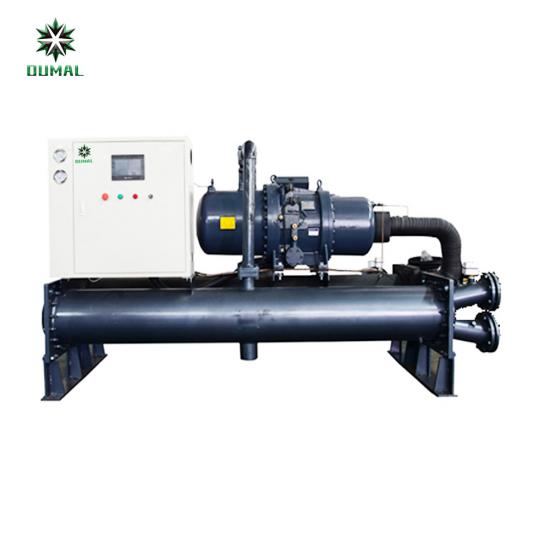
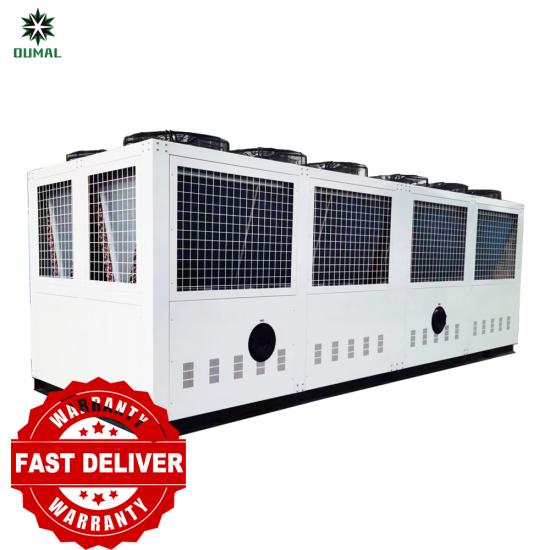
Both air-cooled screw chillers and air-cooled scroll chillers are air-cooled chillers. Air-cooled chillers use air cooling, eliminating the need for cooling towers, cooling water pumps and piping systems that are essential for cooling water systems. Areas with poor water quality cause condenser fouling and water pipe blockage, and also save water resources. It is the most economical and simple model for maintenance and repair of cold water air-conditioning equipment.


Advantage:

Functionally: The air-cooled screw chiller and the scroll chiller have the same refrigeration function. Refrigeration, heating, heating, and energy are all electric energy.

Application industry: Du Shi is mainly used in industries such as industry, medicine, food, coal, and shopping malls.


Comparison of unit characteristics:

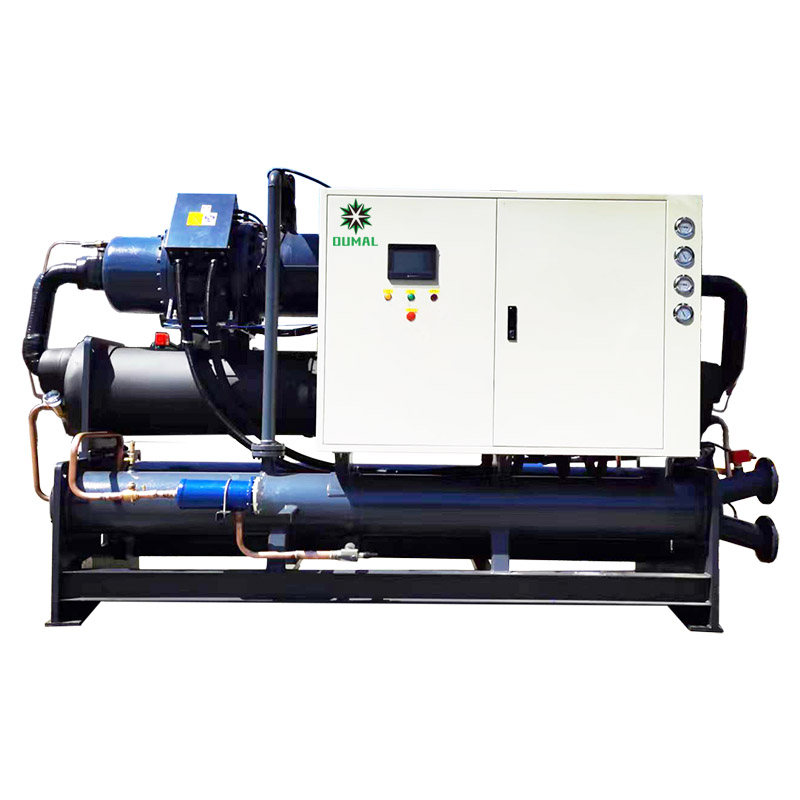
The air-cooled screw chiller is named air-cooled screw chiller because of its key component-the compressor adopts a screw type. The state of the unit from the evaporator is a gas refrigerant; after adiabatic compression by the compressor, it becomes a high temperature and high pressure state. The compressed gas refrigerant is cooled and condensed at equal pressure in the condenser, and then changes into a liquid refrigerant after condensation, and then expands to a low pressure through a throttle valve and becomes a gas-liquid mixture. Among them, the liquid refrigerant under low temperature and low pressure absorbs the heat of the substance to be cooled in the evaporator and becomes a gaseous refrigerant again. The gaseous refrigerant re-enters the compressor through the pipeline to start a new cycle. These are the four processes of the refrigeration cycle. It is also the main working principle of the screw chiller.


The air-cooled screw chiller adopts the international brand screw compressor, and is equipped with high-quality and high-efficiency copper pipes to make the condenser, evaporator and world-famous control components, so that the unit has small size, low noise, large energy, long life, and easy operation And other advantages, its beautiful and exquisite shape design and reliable and stable high-performance quality are outstanding among similar products!


Features of air-cooled screw chiller:

1. Semi-hermetic screw-type high-efficiency compressor, with single-machine system and dual-machine system options, compact unit structure. Easy to maintain; adopt a new 5:6 screw rotor design, stable operation, high efficiency and energy saving.

2. Advanced intelligent defrosting method, microcomputer control analyzes the temperature of each point at any time, optimizes the defrost cycle time, and ensures that the defrosting in time does not affect the normal operation of the equipment.

3. Professional motor cooling device. Meet the harsh operating conditions.

4. Using a new generation of high-efficiency heat exchange tubes, the heat transfer coefficient can be increased by 5%. The double groove tube sheet design and advanced tube expansion technology make the structure more sealed and reliable, and completely avoid the possibility of mutual penetration.

5. Generally, no water pump is installed in the unit, and there is no water tank, so an external water tank is needed for circulation.


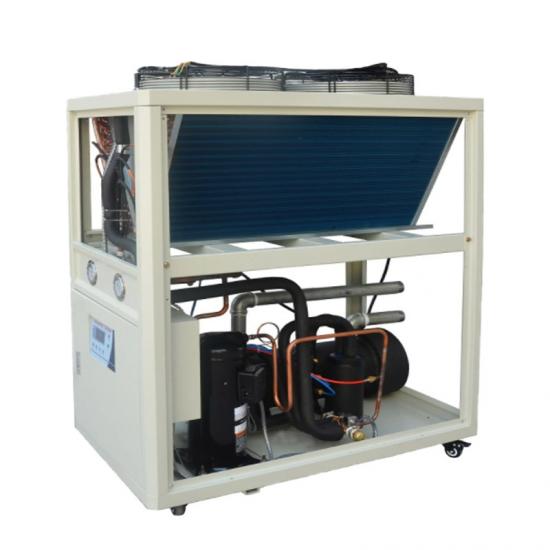
The air-cooled scroll chiller is called an air-cooled scroll chiller because its compressor uses a fully enclosed scroll compressor, and the condenser uses a finned fan. The scroll air-cooled chiller has a cooling capacity from 27.8kW to 284.5kW and a heating capacity from 29kW to 303.5kW, which can meet the different load requirements of various occasions. The unit has a compact structure, small floor space, simple pipeline design, only requires an external water pipe, and is easy to install and maintain. The machine components are integrated and modular. The modular unit is assembled from 2 to 8 modules and has the characteristics of large cooling capacity, mutual standby, and gap operation.


Features of air-cooled scroll chillers

1. The unit has a compact structure, small floor space, simple piping design, only requires an external water pipe, and easy installation and maintenance.

2. Intelligent control, the unit can automatically adjust the output of the compressor input according to the load change, so that the unit can maintain the best coordination with the highest efficiency at any time.

3. Use imported fully enclosed scroll refrigeration compressor. It has the advantages of high efficiency, low noise, low vibration, reliable operation and long life.

4. The microcomputer control system is adopted, which has powerful functions of safety protection, communication, fault judgment, automatic adaptation, etc.; it can automatically monitor various parameters and operating conditions of the unit during operation.

5. The machine components are integrated and modular. The modular unit is assembled from 2 to 8 modules and has the characteristics of large cooling capacity, mutual standby, and gap operation.

6. Provides multiple protection functions such as high and low pressure protection, freezing water anti-freezing protection, power phase sequence protection, lack of phase protection, insufficient water flow protection, compressor motor overheating, etc.

7. The box structure of the whole machine shell is beautiful in appearance and compact in structure. The operation of the unit can be checked at any time; the unit can have its own water tank and circulating water pump according to the cooling capacity, without cooling tower and cooling water pump, installation and maintenance are simple and convenient;

Chiller installation and maintenance instructions

2025-06-20

Chiller installation and maintenance instructions


1. Installation instructions

1. Machine installation, it is required to lay flat and not tilt;

2. There should be a maintenance space of about one meter on both sides of the machine;

3. Connect the cooling water inlet and outlet specifications of this machine to your cooling system;

4. The ice water pipe must be replaced with a loop to allow the ice water to circulate;

5. The ice water pipeline must be insulated;

6. When connecting the power supply, please make sure that the power supply is sufficient to bear the maximum load of the chiller’

7. The power supply of the unit must be controlled separately;

8. Must be grounded to ensure safety.


2. Troubleshooting

When the unit fails, observe the abnormal indication, then turn off the main power switch, and check according to the following steps;

1. When it shows abnormal cooling, it should be checked;

a. Whether the ice water source is sufficient;

b. Whether the water pipe valve is open;

c. Whether the ice water pump is operating normally;

d. Whether the water pipeline is disconnected.

After confirming that it is correct, press the reset button to reset, and then turn it on after 5 minutes’

2. When the refrigerant is insufficient, check the unit pipeline for leakage and blockage, reset it after troubleshooting, and restart it after 5 minutes;

3. When the display is too low, check whether the ice water pipe valve is open and whether the ice water circulates normally, and restart it after 5 minutes;

4. When the oil pressure is too low, you should look through the window to see if the oil is sufficient, and add it if it is insufficient;

5. When the compressor is overloaded, it should be checked;

a. Electromagnetic switch, whether there is aging, open circuit, poor contact, etc.;

b. Check whether the insulation resistance of the compressor is normal with a resistance meter;

c. Use a universal meter to check whether the coil resistance of the compressor is balanced. If there is any abnormality, the compressor must be replaced (note: in this case, the compressor cannot be turned on blindly without finding the cause of the failure);

When the pump is overloaded, the inspection method is the same as 5.


Three, maintenance

1. For example, in the injection molding industry: to reduce the production of "pouring sweat" from the mold, before stopping the plastic machine, turn off the cold water valve of the attached mold, or turn off the cold water, which will increase the water temperature in the mold cavity. Prevent the mold from rusting.


2. The chiller has been used for more than six months, and the high/low pressure often fails, or the cooling capacity is reduced. Please arrange for staff to clean the radiator, (if the chiller is equipped with a pressure gauge, pay attention to whether the pressure is higher than 21KG/cm2, such as If it exceeds, clean the radiator, or check whether the water pipe has been turned off). If you follow the above instructions for repairs several times, the chiller fault alarm will sound for a long time, please notify the factory to contact for repair.


3. The chiller will not be used for a period of time. Due to the solidification of water and dirt, the water pump rotor must be rotated before starting to avoid the pump blades not rotating, which may cause protection of the pump.


Water chiller cleaning method (it is necessary to find professionals to operate)

1. Clean the condenser: first remove the dust on the condenser, and then clean it with a special washing liquid. The washing liquid should be used carefully and the concentration of the washing liquid should be adjusted. Do not touch, touch the skin and eyes, if you accidentally touch it, please Rinse immediately with plenty of water and send to the hospital for treatment if necessary.


2. Cleaning the evaporator: first remove the dirt on the evaporator, clean it with clean water, do not damage the evaporator, and drain the sewage.


Four, matters needing attention

The company’s product warranty period is 15 months, and the warranty will not be provided for the following situations:


1. Those who disassemble the crew by themselves


2. Self-adjusting the pressure controller, temperature controller and control panel data, and self-adding refrigerating oil and refrigerant to cause damage to the unit;


3. The equipment and accessories of the unit are damaged by the customer's own transportation or improper installation;


4. The thermal load of the user exceeds the load of the unit, causing damage to the unit.


Warning: When not in use in winter, please drain all the water to avoid damage to the machine due to icing. Remember!

Common failures in chiller maintenance

2025-06-20

Common failures in chiller maintenance

During the maintenance of the chiller, in some environments with many dust layers, after the chiller has been used for a period of time, we will find that the chiller is noisy, and there are many dust layers on the accessories. This is a common phenomenon in the use of the chiller. At this time, the chiller is We need to serve it.

First of all, the chiller is a device that provides cold to the outside world, in other words it takes away the heat, so the ventilation environment required by the chiller is very important. The water cycle of the chiller is a simple process, but we must pay attention to the details of the simple process. If the front hood of the chiller is filled with dust, it will affect the heat dissipation of our chiller. Once the heat dissipation is affected The impact will directly cause the cooling effect of the chiller to drop sharply. If we do not remove the ash layer from time to time, on the one hand, it will affect the cooling effect, on the other hand, it will cause the internal components to burn out. After many chillers have been used for a period of time, the poor cooling effect is basically caused by this aspect.


Secondly, the temperature of about 20 degrees Celsius is just suitable for the strong growth of our microorganisms. When we use the chiller, sometimes its temperature is controlled at about 20 degrees Celsius. A large number of microorganisms accompany our water cycle, and some microorganisms are attached to our filter. Above the board, the waterway is not smooth, causing the chiller to produce a lot of noise. Even some microorganisms are attached to the heat exchanger of the chiller, causing the chiller's cooling effect to be poor.


Combining the above two points, I must maintain the chiller regularly and clean up the dust and debris in the chiller in time, so that the functions of our chiller can be guaranteed in all aspects, and it can maintain normal operation. The following are common faults in the maintenance of chillers.


1. Power failure. If a power failure occurs during the use of the chiller, it may cause the fuse to blow, the phase sequence protector to burn, phase loss, or instability. The solution is simple, that is, to replace the corresponding protector, Or fuse to ensure no phase loss and power supply stability.


2. Water pump failure. If there is a water pump failure, it may be caused by the overload protection action on the AC contactor of the water pump, the capacitor burned out, or the water pump itself; it is necessary to deal with the overload problem, replace the capacitor, or the water pump identity problem.


3. Water pump failure. If the compressor fails, it may be because the compressor capacitor is burned out and the compressor coil winding is abnormal. At this time, replace the capacitor or unwind the winding to restore it to normal.


4. Pressure switch failure, if it is a high and low pressure switch failure, it may be that the filter is blocked, the system is insufficient in winter, the circulating cooling water is stopped, the heat exchange cooling fan stops working, etc., it is necessary to replace the appropriate filter and add refrigerant to the cooling system ; At the same time, check whether the sweat cooling water circulating pump is normal; check whether the fan is working normally, if it is abnormal, repair it as soon as possible.


1. Reverse alarm:

1. The three-phase wiring of the power supply is wrong (pay attention to the auxiliary control line), check the wiring problem, turn on the power switch and the water pump switch to burn the fuse, and the circuit is short-circuited. Check the control wire and the main power line. The water pump rotor is stuck. Loosen the motor rotor;


2. If the fuse is not installed, install an appropriate fuse.


3. The power indicator is damaged, replace the electronic board.


2. Compressor failure


1. Compressor coil is short and open circuit, replace the matched compressor


2. Compressor overload protector automatically trips, adjust the current limit of the protector appropriately within the allowable range and press the reset button


Three, water pump failure


1. The water pump motor coil is short, open circuit, repair the motor coil or replace the motor


3. The overload protector of the water pump automatically trips, and the current limit of the protector is appropriately increased within the allowable range. Press the reset button halfway.


Fourth, the compressor is frosting


1. If the circulating water is flowing or the valve is not opened, check the water valve and all pipelines to ensure unobstructed flow, and install short-circuit pipelines.


2. The circulating water pipe configuration is too small, increase the diameter of the circulating water pipe to ensure the normal water circulation.


Troubleshooting of chiller maintenance

1. The temperature sensing wire and temperature measuring body are dirty, wipe the temperature measuring body clean

2. The temperature control meter is damaged, repair or replace the temperature control meter

3. Poor contact of the temperature sensing wire, repair or replace the temperature sensing wire

4. There is no circulating water in the water tank, and a circulating water path is short-circuited between the chilled water outlet and the inlet

5. The temperature control meter is out of control. Replace the temperature control meter. High pressure failure. Poor heat dissipation, dirty radiator, bad air to clean the radiator, improve ventilation conditions, and the cooling fan does not work. Check whether the fan motor is burned out or short circuit. Repair or replace the motor. Damaged, replace the high pressure

Four methods for judging the flow of chilled water in a chiller

2025-06-20

Generally speaking, when buying a chiller, you will have questions. I don't know how to judge the chilled water flow rate of the chiller? From what aspects should the chiller water flow be considered? Here is a brief talk.


The detection of the return water temperature and the outlet water temperature of the chiller should be carried out in the normal state of the unit:


After 30 minutes of starting up, check the system or the chilled water system inlet and outlet thermometers through the unit's control system parameters, and the inlet and outlet water temperatures of the unit can be read when the unit is running. The difference must be about 4-6 degrees. If the temperature difference between the inlet and outlet water is too large, it means that the water flow of the water system through the plate is too small, which may cause the unit to fail to operate normally or be damaged.


Water pressure detection of the inlet and outlet pipes of the unit

Through the detection of the return water pressure and the outlet water pressure value, check the water flow rate of the chiller under the pressure difference between the inlet and outlet water pressures in the random manual of the unit. By referring to the water flow corresponding table or diagram of the unit in the manual, So as to judge whether the water system is normal; and through this difference to judge which section of the water pipeline has a large resistance value, and make corresponding rectification plans and actions.


Compressor copper pipe suction temperature detection only needs to be carried out during refrigeration operation

If it is detected that the suction temperature of the compressor is lower than 0 degrees after the refrigeration chiller is turned on for 30 minutes, it means that the water flow in the water-side heat exchanger is not enough, which causes the evaporation temperature and the evaporation pressure to drop, and causes the Freon to flow in the evaporator. The suction pipe of the compressor is still evaporating and absorbing heat, which will cause the suction temperature of the compressor to be lower than 0 degrees; in addition, it is necessary to exclude the drop in evaporating pressure and evaporating temperature caused by the too low water temperature set point; The low water temperature unit can be considered normal as long as the compressor has a suction superheat of 6~8℃. Therefore, under normal water flow, the suction temperature of the compressor will generally be greater than 0°C, and water system problems should be eliminated if it is lower than this value.


The current needs to be detected when the pump is running

By detecting the running current of the chiller water pump and comparing it with the rated current, it can be judged whether the actual water flow is larger or smaller than the rated water flow of the pump. A comprehensive judgment can be made with the previous parameters to obtain an accurate water system detection analysis and judgment. Report.


The water selection pump is generally centrifugal, so it is a problem to determine its flow and head.

Determination of pump flow:

We can calculate the energy balance of the chiller as a system. The heat entering the system includes: the cooling capacity plus the motor power, the heat removed from the system, the heat carried by the cooling water and the heat dissipated in the environment, and the heat transferred to the environment is omitted. According to the process requirements (inlet water temperature and outlet water temperature), the flow of circulating water can be obtained. For example, the total maximum cooling capacity of a centrifugal refrigerator and a screw refrigerator is 2637+1231=3947kw, The motor power is: 467+256=723kw, and the total heat (cold) generated by 4670kw needs to be removed. If the cooling water passes through the cooling tower to change from 37°C to 32°C according to the design requirements, the amount of heat it brings out is The water volume should be: 4670÷1.163×1000÷(37-32)=803.1m3/h

, (1.163 is the conversion coefficient between kilowatts and kcal), so that the flow rate of the pump should be determined, generally consider two pumps operation, one pump standby mode, in order to facilitate operation in the high temperature period.

The second is the pump head. It should calculate the resistance loss based on the flow rate of the water in the pipeline (determined by the size of the pipeline), the length of the pipeline, the local resistance (the condenser in the chiller (can be found in the manual), and the control parts. Cooling water is a circulating system, you don’t need to consider the height difference, just add the height difference of the cooling tower. The pipe flow rate is generally about 1m/s, you can press: (pressure drop per meter of pipe mpa/m) i= Calculate with the formula 0.0000107×v×v÷d^1.3, where v is the average flow velocity (m/s), so the pump head is also determined.

Glycol chiller VS water chiller-why chiller use glycol?

2025-06-20

The global demand for industrial process cooling system remains steadily rising. Reliability and minimal downtime are the keys to achieving consistent and profitable industrial and commercial processes. This article will consider the best way to achieve the optimal temperature required for production processes in the metal finishing, medical, brewing, and agricultural industries.


Glycol chiller VS water chiller


1: How does the chiller work?


So, how does the chiller work? The process circulates, but we will start from where the cooling medium is connected to your process equipment.


The coolant in the system absorbs the heat energy in the process, which usually causes a phase change to a gas. The gaseous refrigerant is then circulated to the condenser, which discharges heat through evaporative condensation or cooling towers. This heat exchange condenses the cooling medium into a colder liquid, which is sent back to the process heating source to start the cycle again.


What type of coolant is used in the chiller?


The type of coolant used in the chiller depends on the process requirements and cost considerations. The most popular coolant is water or a mixture of water and another substance with appropriate thermal conductivity (such as a glycol compound).


Water: Using water as a coolant is an economical method because in most cases, water can be easily obtained at the lowest cost. Alternatively, pure water (deionized water, reverse osmosis) can be used in a water-based chiller to achieve higher cooling efficiency.


Glycol: glycol-based coolants consist of ethylene glycol or propylene glycol. Although the two variants have similar physical properties, do not mix them. The main advantage of glycol coolant is to improve corrosion resistance and antifreeze performance.


2: Why use ethylene glycol for cooling


Compared with using ordinary water as the cooling liquid, the use of glycol-water mixture as the cooling liquid has many advantages. These advantages are due to its unique physical properties, including a lower freezing point than water.


Heat transfer between water and glycol

For water without impurities, its freezing point is 0°C, which is much higher than when pure ethylene glycol becomes solid at -13°C. When the mixture of ethylene glycol and water is changed, the freezing point of the coolant will also change. As an example, 10% ethylene glycol will freeze at -3.5°C, while a 60% ethylene glycol solution will freeze at -52°C.


It can be clearly seen from the above analysis that the refrigerant characteristics of ethylene glycol are more suitable for refrigerators that are expected to operate in a low temperature environment. Under these hot conditions, the cooling water can freeze and hinder the circulation of the chiller, while reducing overall efficiency.


In contrast, using a glycol-based chiller will take advantage of its antifreeze properties to ensure that the coolant maintains the desired fluid state.


3: glycol chiller VS water chiller


Both glycol chillers and chillers can be used to satisfactorily dissipate the heat generated during the production process. The fundamental difference between the two types of chillers is the change in their freezing point and thermal conductivity.


The freezing point of pure ethylene glycol or a mixture of ethylene glycol and water is much lower than that of pure water. This means that glycol-based chillers are more suitable for low-temperature environments. On the contrary, compared with glycol mixtures, water has a better ability to retain and conduct heat in related processes. As a result, the heat transfer efficiency for water chillers will be higher than glycol chillers.


In general, the operator needs to consider the ambient temperature of the location environment before choosing the type of chiller.


1. How does the glycol chiller system work?


Glycol chiller equipment consists of refrigeration components and pipes containing glycol-water mixture as coolant. The cooling fluid from the refrigeration unit is guided through pipes associated with the heat exchanger surrounding the heating process. After absorbing heat from the related process, the warmed coolant returns to the refrigeration unit for cooling, and then the process is repeated.


Glycol content in chilled water system


For many types of chillers, ethylene glycol is mixed with water in a 60/40 ratio. A higher percentage of ethylene glycol will greatly enhance the antifreeze performance of the mixture. This is useful in situations where rapid cooling is required. In these cases, the process can be cooled to very low temperatures without freezing the coolant in the pipeline.


How does the chiller system work?


Conventional water chillers work according to the principle of heat transfer between fluid and solid media. These cooling systems work by endothermic or vapor compression. The basic components of the water chiller system include a refrigeration unit and a piping system for circulating cooling coolant.


In the past ten years, oumal chillers have been manufacturing high-quality industrial chillers. With impressive water-cooled and air-cooled chillers, your industrial refrigeration needs will surely be met.

Categories
Tags