头部背景图片

Reel Sharpening Of Reel Mower

2025-08-07

Sharpening is an essential aspect of maintaining the cutting efficiency of a reel mower. How can you discern the need for sharpening? Look for indicators such as an uneven grass cut, a lackluster appearance with brown-tipped blades, streaks, stragglers, and excessive noise emanating from the cutting unit.

One reliable method to determine this is by inspecting the edges of the reel and bedknife. Examine them for signs of dullness, nicks, bends, or improper contact between the two components.

The consequence of wear: the leading edges become rounded, and the bedknife's angle conforms to the circular path of the blades.

Visually inspect the reel blades and bedknife for any damage, and gently run your fingertips along their edges. However, exercise caution by ensuring that the reel is not operational, and avoid sliding your fingers along the length of the edges.

Rounded edges on the reel blades and bedknife will cause the grass blades to be crushed and torn rather than precisely sliced. Neglecting to maintain proper contact will quickly result in dulled edges.

When the bedknife and reel maintain light contact, a clean cut is achieved, resulting in an enduring sharpness.

Insufficient contact, indicated by a gap between the bedknife and reel blade, accelerates wear on the cutting edges and necessitates more frequent grinding.

Lack of contact leads to the undesirable pinching and tearing of the grass leaves, compromising the quality of the cut and hastening the deterioration of the cutting edges. As a consequence, the aftercut appearance suffers, and the health of the turf is adversely affected.

It is crucial to keep the cutting units as keen as possible, as it offers a multitude of benefits:
• Fosters the growth of healthy grass.
• Maximizes the cutting unit's performance.
• Prolongs the mower's lifespan.
• Optimizes the operator's mowing time.
• Enhances the tractor's operational efficiency.
• Ensures the best possible aftercut appearance for the turf.


When the blades of the cutting unit become dull and the quality of the cut deteriorates, the natural inclination is to tighten the contact between the bedknife and reel, resulting in heavy contact.

Excessive bedknife-to-reel contact can lead to rifling, characterized by grooved or wavy wear patterns on the reel and/or bedknife. This condition can only be rectified through grinding of the reel and bedknife. BACKLAPPING WILL NOT CORRECT THIS CONDITION. the bedknife will need to be replaced rather than simply ground.

A barrel-shaped reel, caused by flexing of the cutting unit frame, will also require grinding to restore it to its cylindrical shape. This issue is more likely to occur in cutting units with welded frames, rather than the newer DPA model cutting units with sturdier bolted frames.

Flexing of the frame can result in uneven wear and eventually lead to rifling.

If the reel wears unevenly, it becomes challenging to maintain parallel alignment of the bedknife across the entire width of the reel. You may be able to pinch paper in the middle, but not at the ends, or vice versa. When adjusting a cutting unit with this condition, the tendency is to tighten the bedknife-to-reel contact so that the paper can be pinched and cut across the entire bedknife and reel, resulting in heavy contact.

Grinding is also necessary if the reel becomes cone-shaped or tapered. Reels naturally acquire a tapered shape with use. Failure to grind the reel back to a cylindrical shape can lead to a discrepancy in the cutting height between adjacent cutting units.

There are various methods for sharpening a cutting unit, and the choice of method depends on the condition of the cutting unit and the intended use. For instance, if you are about to mow greens that have undergone core aeration or topdressing, grinding the reels and installing new bed knives may not be ideal.

Sharpening Methods:

• Maintain proper ADJUSTMENT

• BACKLAP the bedknife and reel

• GRIND the reel and bedknife


By regularly backlapping, the sharpness of the reel blades and bedknife can be maintained for longer periods between grindings.

However, it's important to note that backlapping cannot be used to sharpen a dull reel or bedknife. Backlapping serves as a maintenance practice for maintaining the edge.

During backlapping, as the reel blades run against the bedknife, a slight burr may form along the front cutting edge surface of the bedknife. Use a file or facing grinder to remove this burr.

Backlapping should be performed after a single blade grinding to establish a land area and ensure a perfect match between the bedknife and reel edge.

Backlapping is not intended to correct severely damaged or rounded blades, rifling, or taper. If, after approximately 5 minutes of lapping, the edge is not restored, it is time to grind the reel and bedknife.


Backlapping is often a scheduled maintenance process, particularly for greens mowers.


WARNING:

Ensure the utilization of a brush endowed with an elongated handle to apply the polishing compound onto the rotating reel. Employing a brush with a short handle could potentially result in your hand being entrapped within the reel, thereby causing severe harm. Exercise caution by keeping your hands, feet, and attire at a safe distance from the moving components!

Should you choose to incorporate backlapping into your usual maintenance routine, engage in backlapping sessions frequently, albeit for brief periods of time. For instance, allocate a mere five minutes per cutting unit.

Prior to commencing the appropriate grinding of the reel, rigorous cleansing and inspection of the reel are prerequisites. Verify that the blades are securely affixed and unmarred. Furthermore, ascertain the reel bearings' optimal condition, free from any discernible play. Confirm the alignment of both the cutting unit frame and roller brackets, ensuring neither distortion nor impairment resulting from encounters with trees, posts, or the edges of cart paths. Align the cutting unit itself so that the grinding wheel moves in parallel with the reel shaft, thus achieving the desired cylindrical form during the grinding procedure.

Adhere strictly to the guidelines provided by the manufacturer of the grinder for the setup and operation of said apparatus.

During the grinding process, judiciously avoid overheating the reel blades. Gradually extract minute amounts of material with each passage of the grinder.

Upon completing the grinding process, meticulously undertake a comprehensive setup and adjustment protocol for each cutting unit.

Reel grinders are produced by various manufacturers, many of whom also fabricate bedknife grinders.

Never neglect the essential precaution of wearing a face shield or protective eyewear when partaking in grinding or backlapping activities.


It is of utmost importance to comprehend that reel mowers have been meticulously crafted and engineered to maximize the utilization of available power derived from the engine and hydraulic systems. To achieve this goal, we incorporate a "relief" or back grind on each reel blade, effectively reducing the surface area of contact between the blade and the bedknife. This proven approach not only diminishes power requirements but also enhances the overall operational efficiency of the machine. The significance of this aspect varies depending on factors such as the terrain, grass type, and quantity to be cut.

There exist two distinct methods for manufacturing reel blades with relief. These blades are fabricated using straight stock steel and are subsequently either ground (utilizing a taper relief) or milled (employing a scalloped relief). Regardless of the chosen technique, a relief is incorporated during the manufacturing process. Additionally, on milled relief blades, a finely ground relief is diligently applied.

When it comes to grinding reels, one method employed is Spin Grinding, also known as Flat Grinding. In this process, both the reel and the grinding stone rotate concurrently, ensuring the precise sharpening of the reel. It is occasionally asserted that backlapping is unnecessary following spin grinding since the reel attains a flawless cylindrical shape upon completion of the grinding process. However, this outcome depends on the correct alignment of the reel in the grinder prior to sharpening. Furthermore, the bedknife and bedbar must maintain perfect straightness and parallelism to the reel upon mounting. Performing backlapping aids in removing burrs and rough edges, resulting in a honed edge that promotes even grass cutting.

Should one choose to employ a spin grinder to sharpen straight stock reel blades, such as those found on fairway mowers, a portion or all of the relief may be inadvertently ground off. To restore the relief that was originally manufactured on the blades, the alternative grinding method (single blade relief grinding) must be utilized. It is recommended to conduct the relief grinding first, followed by spin grinding to reestablish the cylindrical shape of the reel and determine the appropriate land width.

Another method employed is Single Blade Grinding, also known as Relief Grinding or Back Grinding. Modern grinding equipment allows for both spin (or flat) grinding and single blade grinding to be performed using the same machine. Single blade grinding is employed when necessary to restore the relief or back grind, which is subsequently followed by spin grinding to sharpen the reel and restore its cylindrical shape.

A recommended relief angle of 30 degrees for each reel blade is advocated. It is permissible to deviate the relief angle by up to 5 degrees in either direction. Opting for a larger relief angle reduces the frequency of reel grinding since the blade land width wears at a slower pace. Nevertheless, a larger relief angle renders the reel blades more susceptible to damage caused by impacts. Conversely, a smaller relief angle may necessitate more frequent reel grinding to uphold the desired blade land width but enhances resistance to damage from impacts.

Prior to commencing the grinding process, ensure that all components of the cutting unit are in optimal condition. Faulty cutting unit components, depending on the type of grinder used, can have an adverse impact on grinding outcomes. Verify that the reel bearings are in good working order and properly adjusted before grinding. Inspect the cutting unit frame and roller brackets to ensure their trueness and absence of bending or damage.

It is essential to identify the specific type of reel to ensure accurate grinding procedures. There are four distinct reel types utilized in various products, categorized by the type of blade relief (scalloped or tapered) and the arrangement of the blades (radial or forward swept). It should be noted that Greensmaster machines solely employ scalloped forward swept reels.

Follow the instructions provided by the reel grinder manufacturer precisely to achieve grinding results in accordance with specifications.

During the grinding process, exercise caution to prevent overheating of the cutting reel blades. Remove small increments of material with each pass of the grinder. Conduct relief grinding on the reel blades until the blade land width reaches the minimum threshold if the current land width exceeds the designated service limit. Subsequently, perform spin grinding to restore the cylindrical shape of the reel and establish the specified blade land width following relief grinding.

Upon completing the grinding of the reel and/or bedknife, adjust the cutting unit as instructed in the Cutting Unit Operator's Manual. After cutting two fairways, reassess the contact between the reel and the bedknife. This initial use will facilitate the removal of any burrs from the reel and bedknife that may cause improper clearance, subsequently accelerating wear. Regularly reassessing the reel to bedknife contact after grinding will prolong the sharpness of both the reel's edge and the bedknife.

Regardless of the grinder utilized, be sure to compensate for any cone or barrel-shaped irregularities. Grind parallel to the reel shaft and refrain from establishing the grinder's setup solely based on equalizing spark patterns at each end. This approach fails to rectify the slight cone shape that often manifests in worn reels.

Reels naturally encounter greater wear on one end compared to the other. Therefore, verify that the reel centerline, represented by the reel.


The Importance of Lawn Care

2025-08-07

After six months of growth, grass blades may become covered by other grass, preventing photosynthesis and ultimately leading to wilting. Over time, these wilted blades may mold and decay, with part of it converting into organic fertilizer, while another part may foster fungal growth. In this situation, simply spraying chemicals will not address the root cause of the problem.

The Role of Lawn Aerators

Lawn aerators effectively expand the soil's surface area, increasing contact between the soil and the atmosphere, and promoting gas exchange. This equipment enhances the soil's aeration, water retention, and drainage capabilities, fostering the growth of microorganisms and reducing harmful substances in the soil. Additionally, aeration promotes root development, accelerates the decomposition of thatch and organic debris, improves soil properties, and enhances the soil's response to fertilizers, benefiting soil conservation.

Potential Adverse Effects

While aeration offers numerous benefits, there are also some drawbacks. For instance, aeration may temporarily disrupt the integrity of the lawn's surface, leading to exposed soil and dehydration. It can also exacerbate the damage caused by pests like grubs and, under suitable conditions, promote weed growth.

Working Principle of Vertical Aerators

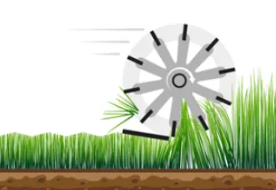
The blades of the aerator move vertically up and down to create holes, ensuring that the aeration holes are perpendicular to the ground and avoiding soil displacement, which improves the quality of aeration. The device is powered by an engine that drives the front wheels, while a crank and link mechanism allows the blades to move vertically. To compensate for the blades not moving forward with the machine after penetrating the soil, a compensation device is installed at the blade mount. When the blades enter the soil, the compensation device pushes the blades in the opposite direction of the machine's forward motion, maintaining the blades' relative stillness to the ground. After the blades are pulled out, the compensation device quickly returns them to position for the next aeration.

This type of aerator is particularly suitable for high-quality aeration in green spaces, such as the putting greens of golf courses. Although its structure is complex and it is costly in terms of energy and production, it effectively enhances the overall health and growth condition of the lawn.

Contact Us

Whether you are a gardener, landscape designer, or lawn maintenance company, our aeration blades are your ideal choice. If you are interested in our products or have any questions, please feel free to reach out to us through the following:

· Websitehttps://www.dxlfgolf.com/

· Mobile: +86 13981920100

· Email2556034587@qq.com / lfgolf888@gmail.com

· Address: Bowang Town, Bowang District, Ma'anshan City, Anhui Province, China


Choose our aeration pins to safeguard your aerator and make your lawn management more efficient and effortless!

Tips & Precautions for Maintaining Your Golf Reel Mower Blade

2025-08-07

A golf sharpener is an essential tool on the golf course✨, and its sharpness directly affects your clubs' performance and effectiveness. Therefore, regular maintenance of your sharpener is a must for every golf enthusiast and professional player! Here are some tips and precautions on how to properly maintain your sharpener📍.

1️⃣ Regular Inspection

Before using your sharpener, always check the blade to ensure there are no chips or dullness. If you find significant wear and tear, it’s time for maintenance⚒️.

2️⃣ Clean the Reel Mower Blade

Before sharpening, clean the blade thoroughly with water and a soft brush to remove any grass clippings and dirt. A clean blade is easier to inspect and maintain 🧼.

3️⃣ Use Professional Tools

When maintaining your sharpener, use professional sharpening tools like sharpening stones or machines🛠️. This will effectively retain the blade's sharpness and prevent damage.

4️⃣ Sharpening Technique

When sharpening, follow the original angle of the blade and maintain consistent pressure during the grind💪. If using a sharpening machine, ensure even speed and pressure to avoid blade distortion.

5️⃣ Test the Blade

After sharpening, use a piece of paper to test the sharpness✂️. If the blade cuts through paper easily, your maintenance was successful!

6️⃣ Blade Care

Once maintenance is complete, it's best to apply a layer of anti-rust oil on the blade to prevent rust and oxidation🌟. Also, store the tool carefully to avoid bumps and pressure.

7️⃣ Regular Maintenance

In addition to checking and maintaining before each use, you should also perform regular comprehensive maintenance on your sharpener to ensure it stays in optimal condition🗓️.

Our company offers high-quality and affordable sharpeners tailored to different models💰, meeting the needs of our customers. Whether you are a professional player or a hobbyist, you can find the right sharpener for you here!

Maintaining your sharpener not only extends its lifespan but also enhances your club's performance. We hope these tips help you better care for your golf tools⛳️!

We offer affordable and high-quality rolling blades --Reel Mower Replacement Blades, ensuring your mower operates efficiently and keeps your lawn well-maintained.

📞 Contact Information:

                         Website: https://www.dxlfgolf.com/

                         Mobile: +86 13981920100

                         Email: 2556034587@qq.com / lfgolf888@gmail.com

                         Address: Bowang Town, Bowang District, Ma'ansha City, Anhui Province, China


Understanding Lawn Mower Blade Design and Maintenance

2025-08-07

Understanding Lawn Mower Blades Lawn mowers are essential tools for maintaining a neat and healthy lawn, and the blade is one of their core components. Understanding the design, types, and maintenance of lawn mower blades, including reel mower replacement blades and Standard Rotary Mower Blades, can help improve cutting efficiency and the aesthetics of your lawn. This article provides a detailed introduction to these aspects.


1. Design of the Blade Lawn mower blades are typically made from high-strength steel, offering excellent wear resistance and corrosion protection. This design ensures that the blades remain sharp in various environmental conditions, providing outstanding cutting performance. The shape and angle of the blades are carefully engineered to achieve efficient cutting while minimizing damage to the grass, helping the lawn stay healthy after trimming.


2. Types of Blades Depending on the type of lawn mower, blades can be categorized into the following types:


Straight Blades: This is the most common blade type, suitable for most household lawn mowers, delivering stable cutting results.

Rotary Blades: Some advanced lawn mowers utilize rotary blade designs, including Standard Rotary Mower Blades, that enhance cutting efficiency and ensure a more even cut across the lawn.

Self-Propelled Blades: In some self-propelled lawn mowers, the blades are integrated with the engine's power system, providing greater cutting power suitable for larger areas of grass.


3. Maintenance and Care Maintaining the blades is crucial for ensuring optimal cutting performance. It is recommended to regularly perform the following steps:


Cleaning: After each use, clean the blades of any grass clippings and dirt to prevent buildup that can affect performance.

Sharpening: Depending on usage frequency, regularly sharpen the blades to maintain their sharpness. Dull blades not only reduce cutting efficiency but can also damage the lawn.

Inspection and Replacement: At least once a year, inspect the blades and replace them if there is serious wear or damage to keep the mower running efficiently.


4. Our Advantage As a professional factory manufacturing lawn mower blade accessories, we strive to provide high-quality blades at competitive prices. Our products undergo strict quality testing to ensure each blade operates efficiently under various conditions. With extensive manufacturing experience, we can also customize blades to meet specific customer needs.


For more information, please visit our website or contact us directly! 

Website: https://www.dxlfgolf.com/

Mobile: +8613981920100

Email:2556034587@qq.com / lfgolf888@gmail.com

Address: Bowang Town, Bowang District, Ma'anshan City, Anhui Province, China


We look forward to collaborating with you and providing the best blade solutions for your lawn mower!

Understanding Reel Mowers Precision Cutting for Lawns

2025-08-07

The Stainless Steel Reel Mower Blades, often referred to as a "clipper," functions similarly to scissors and is typically called a "trim." This type of mower is particularly suitable for finely managing lawns, which are commonly referred to as "turf." The mowing process relies on the collaboration between the reel blade and the bed knife: the bed knife remains stationary, acting as the fixed blade, while the reel blade is the moving component.

The reel rotates around a horizontal axis, and through the interaction of the Clean Cut Reel Mower Blade and the Quiet Cut Reel Mower Blade, it effectively trims the grass blades. Reel mowers place high demands on the quality of the turf as well as the specifications of the mower itself. The diameter of the reel and the number of blades directly influence the mowing performance. Common configurations of reel blades include 5, 7, or 10 blades. Mowers with fewer blades are better suited for cutting longer grass, while those with more blades are ideal for trimming shorter grass. For instance, a reel with 10 blades is particularly effective for low-cutting tasks on golf courses.


Contact Us

Whether you are a gardener, landscape designer, or lawn maintenance company, our aeration blades are your ideal choice. If you are interested in our products or have any questions, please feel free to reach out to us through the following:

· Website: https://www.dxlfgolf.com/

· Mobile: +86 13981920100

· Email: 2556034587@qq.com / lfgolf888@gmail.com

· Address: Bowang Town, Bowang District, Ma'anshan City, Anhui Province, China


How to Choose the Right Ventilation & Cooling Equipment for High-Temperature Regions

2025-08-06

Introduction

In scorching climates where temperatures routinely exceed 40°C (104°F), effective cooling isn't just about comfort—it's about safety and productivity. This guide breaks down how to select industrial-grade cooling solutions that combat extreme heat efficiently.


The High-Temperature Challenge: Key Considerations

1. Climate Profile

    • Dry Heat (e.g., deserts): Prioritize evaporative cooling (works best<60% humidity)

    • Humid Heat (e.g., tropics): Opt for HVLS fans + ventilation systems

    • Intense Solar Radiation:  Roof-mounted units with UV-resistant housings

    2. Space Requirements


    Space Type
    Cooling Approach
    Warehouses (>500m²)Industrial evaporative coolers (20K+ CMH)
    WorkshopsPortable coolers + directional airflow
    Outdoor AreasMist fans + shaded cooling zones

    3. Heat Sources

      • Machinery-heavy sites: Add 20% extra cooling capacity

      • High-occupancy areas: Prioritize air exchange rates (≥40 changes/hour)


      Sizing Your System: A Data-Driven Approach

      (Based on Siboly's Model Selection Guide)

      Step 1: Calculate Air Changes Needed

      Air Changes/Hour (N) = Total Airflow (CMH) ÷ Room Volume (m³)

      Reference Chart:


      Environment
      Air Changes/Hour
      General Space25-30x
      Crowded Areas30-40x
      Machinery/Heat-Intensive40-60x


      Step 2: Determine Total Airflow

      Total Airflow (CMH) = Room Length × Width × Height × N

      Example:20m × 30m × 10m workshop needing 40 changes/hour

      = 6,000m³ × 40 = 240,000 CMH

      Step 3: Select Equipment

      • 240,000 CMH requirement = 12 × Siboly 20,000 CMH roof-mounted coolers

      • Add HVLS fans for 5-8°C perceived temperature reduction


      Equipment Recommendations for Extreme Heat

      1. Evaporative Coolers

      • Best for: Dry regions (≤50% humidity)

      • Top Picks:

        • Roof-Mount Units (1.5KW-3KW) for large spaces

        • Portable 20K+ CMH models with 100L+ tanks

      • Key Features:

        • Corrosion-resistant pads (5090 cellulose)

        • Auto-refill systems for 24/7 operation

    1. Hybrid Solutions (Humid Climates)

      • HVLS Fans (7.3m diameter) + exhaust systems

      • Desiccant dehumidifiers + spot-cooling units

    2. Critical Add-Ons

      • HEPA/Dust Filters (for sandy/dusty areas)

      • Solar-powered options (reduce grid dependency)

      • Remote monitoring (track humidity/temp via app)


      Cost-Saving Strategies

      • Energy EfficiencyEvaporative coolers use 90% less power than AC

      • Zoned Cooling: Target only occupied areas

      • Preventive Maintenance:  Clean pads monthly → 30% efficiency boost

      Real-World Case: Saudi auto plant reduced cooling costs by 62% using roof-mounted evaporative systems + HVLS fans.


      Common Mistakes to Avoid

      1. Under sizing equipment for heat-intensive processes

      2. Neglecting humidity control in tropical zones

      3. Using residential-grade units in industrial settings


      Call to Action

      "Struggling with extreme heat? Our engineers will design a custom cooling solution—request a free site assessment today!"

      +86-0591-23533555 |  siboly@siboly.com

      6 signs that it's time to replace your press brake

      2025-08-01

      In sheet metal manufacturing, bending machines are a very critical link. However, many factories still have old bending machines that have been used for more than ten years. They seem to be "usable", but they have already become the "invisible killer" of production line efficiency, quality consistency and even customer satisfaction.

      The following are 6 clear signals summarized from an engineering perspective, which show that your bending machine has dragged down your production capacity, profits, and even order opportunities —— it is time to consider upgrading and replacing the machine.


      1. Bending accuracy is difficult to guarantee and rework is frequent


      Common manifestations:

      For the same batch of products, the angle deviation is ±2~3°, and the end "corner drop" is serious;

      Workers repeatedly adjust the angle, resulting in high test piece costs and low yield rates;

      The cumulative dimensional error after multiple bending steps is large, which affects assembly or welding.

      The reason behind:

      The structure of the old torsion shaft bending machine is worn and deformed;

      The synchronization error is uncontrollable and there is a lack of closed-loop feedback from the grating scale;

      Lack of real-time compensation mechanism.

      Impact: Unstable precision → Customer returns → High quality control pressure → Lost orders

      Recommendation: Upgrade to an electro-hydraulic servo bending machine (dual Y-axis independent control + closed-loop compensation), which can achieve angle control within ±0.5° and ±0.2mm repeatability.


      2. Changing molds and adjusting machines is troublesome, changing orders is slow, and workers are annoyed


      Common manifestations:

      Changing the mold/plate thickness/angle all depends on manual adjustment, which takes 5 to 10 minutes of trial and error;

      The CNC system cannot automatically adjust the gap, pressing, angle compensation, etc.;

      Changing one process slows down the entire production line.

      The reason behind:

      Older press brakes lack automatic gap/angle/compensation systems;

      The CNC system is too old (such as E21/E200) and only supports basic control;

      There is no mold identification system and no prompts when changing molds.

      Impact: Slow order change → High reliance on manual labor → Overall efficiency declines → Unsuitable for multi-batch flexible orders

      Recommendation: Choose a new CNC bending machine with automatic die change (ATC), die recognition, and automatic loading of process programs (such as DA66T, ESA S660 system).


      3. Hydraulic system frequently has problems, and maintenance becomes the norm


      Common manifestations:

      Oil cylinder leaks, seal fails, and system temperature rises;

      The solenoid valve sometimes works and sometimes doesn't, and the action is "stuck" or "empty";

      Hydraulic oil needs to be changed twice a year, and maintenance costs are rising year by year.

      The reason behind:

      The hydraulic system is aging, and the internal seals and valve groups are worn;

      Low control accuracy, large movement impact, and increased wear;

      The cooling system fails or the oil pump efficiency decreases.

      Impact: Frequent downtime → High maintenance costs → Delayed delivery → Poor after-sales reputation

      Recommendation: Upgrade to an electro-hydraulic servo system, using a proportional servo pump + intelligent temperature control + low-noise oil pump to extend system life, reduce energy consumption and maintenance pressure.


      4. High energy consumption, high noise, poor operating environment


      Common manifestations:

      The main motor is running continuously, and is "wasting energy" even if it is not bending;

      Noise is greater than 85 decibels and vibration is strong, affecting the health of operators;

      The oil temperature rises quickly and overheating alarms frequently sound in summer.

      The reason behind:

      The traditional hydraulic bending machine is a quantitative pump + continuous pressure supply system;

      There is no energy-saving mechanism and the motor runs at full speed throughout the entire process;

      The old machine lacks energy-saving/quiet design.

      Impact: Increased electricity costs → employee turnover → Failure to pass ISO environmental certification

      Recommendation: Use an electro-hydraulic servo system + a low-noise hydraulic station to save 30-60% energy and significantly improve the workshop environment.


      5. The equipment cannot be connected to the automation system and cannot keep up with the trend of intelligent manufacturing


      Common manifestations:

      Cannot connect to robotic arms/automatic stacking equipment;

      The CNC system cannot communicate with the MES/ERP system;

      Unable to collect data, track quality, or upload and download programs.

      The reason behind:

      The CNC system is closed or outdated and has no communication interface;

      The control architecture does not support linkage with external devices;

      No industrial bus or network connection capability.

      Impact: Factory automation deployment is hindered → Falling behind peers → Wasted upgrade investment

      Recommendation: Choose an open CNC system that supports OPC, Modbus, and Ethernet communications (such as Delem, ESA, Cybelec, etc.) to achieve intelligent factory connection.


      6. Customer requirements have changed, and the old equipment is no longer able to meet the needs


      Common manifestations:

      New customer specified "stainless steel within ±1° error", which could not be achieved;

      Overseas customers have stricter acceptance procedures, requiring video simulation and angle testing;

      The customer needed to quickly deliver multiple model orders, and the old machine was difficult to handle.

      The reason behind:

      The market demands upgrades, but the equipment is not updated synchronously;

      Unable to quickly respond to small-batch, high-variety orders;

      Lack of digital management and control makes it impossible to meet customer quality tracking requirements.

      Impact: Loss of old customers → Loss of large orders → Forced profit reduction → Loss of competitiveness

      Suggestion: timely replacement of bending machines to keep up with the market rhythm will not only improve quality, but also enhance brand image and bargaining power.


      Summary: Replacing bending machine ≠ spending money, it is "stop loss", not "whether it can be used", but "whether it can still help you make money"


      When many companies are hesitating about whether to replace equipment, they often only look at whether the bending machine can still be used, but ignore a core fact: the real money spent is not on buying a new machine, but on rework, errors, delays, and customer loss caused by the "old machine".

      If you find that the problems mentioned above are common in your factory, you may consider replacing it with a stable and intelligent bending machine provided by ZYCO to get your production line running again!


      press brake machine china


      Why do customers now prefer Electro-Hydraulic Press Brake?

      2025-08-01

      In the past, many customers considered price first when purchasing a press brake, but now, more and more users are turning their attention to Electro-Hydraulic press brake.

      Whether the customers are from the Middle East, Europe, Southeast Asia or South America, we have found one thing in common: they are more willing to pay for high performance, low energy consumption and intelligence.

      So, "Why do customers now prefer Electro-Hydraulic Press Brake?" The answer is actually very simple —— it solves problems that traditional equipment cannot solve.


      ✅ Reason 1: Higher bending accuracy and more stable quality


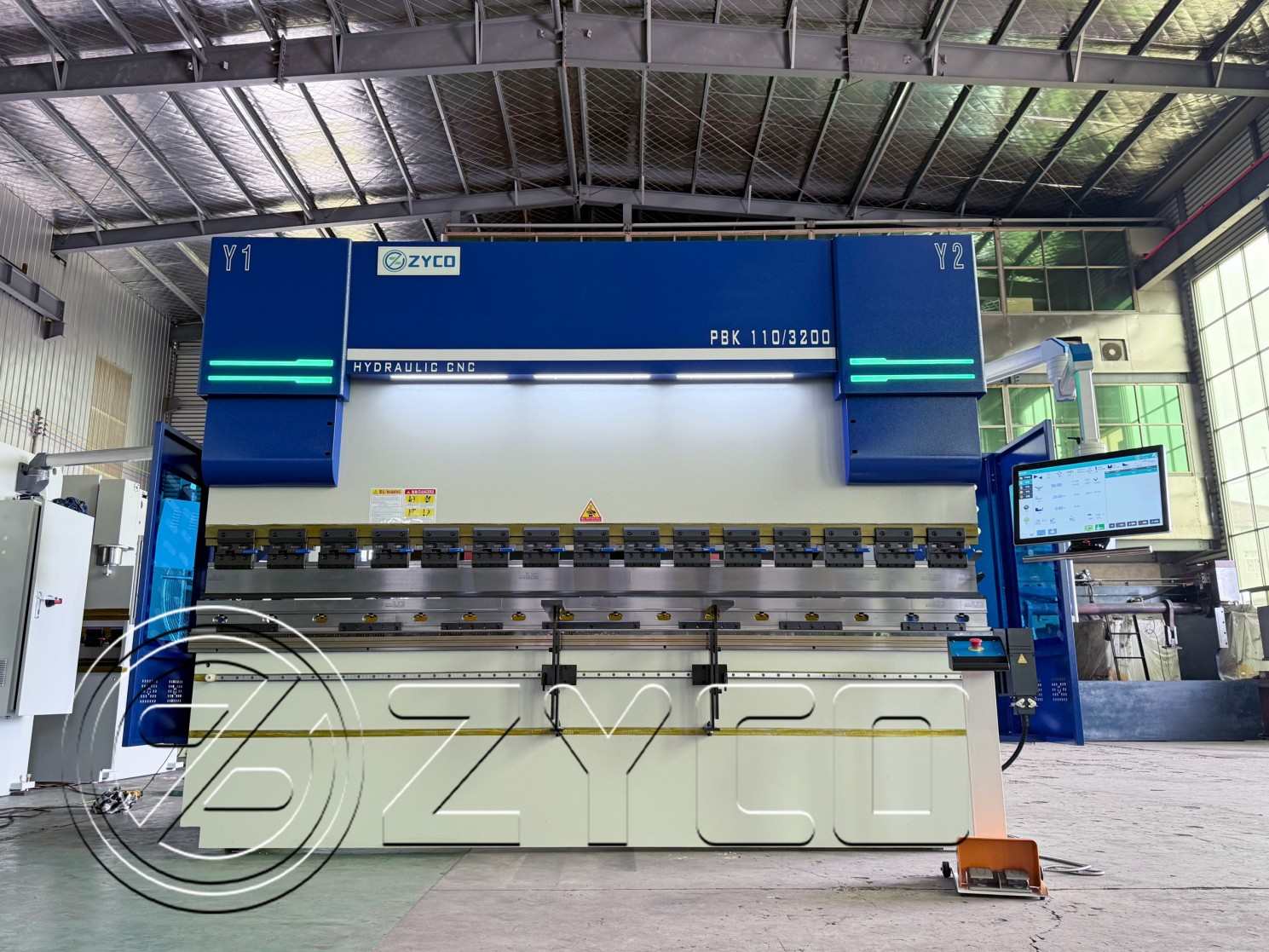
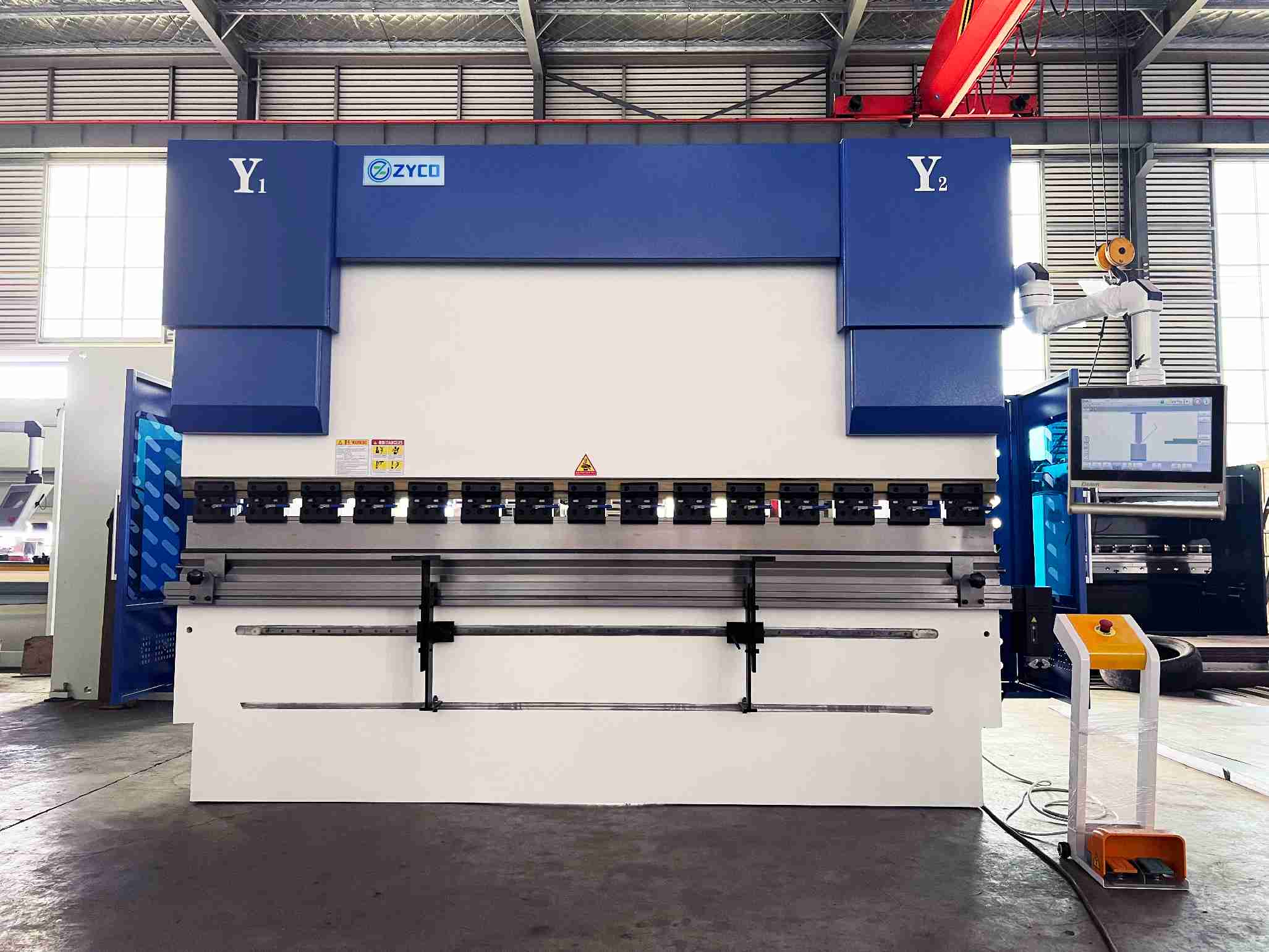
      The electro-hydraulic bending machine adopts left and right independent cylinder control (Y1/Y2), and performs closed-loop synchronous control through a servo proportional valve. Compared with traditional torsion shaft bending machines, it has obvious advantages:


      automated sheet metal bending


      · The system monitors the cylinder position in real time through the grating ruler and automatically corrects the deviation every second;

      · The bending angle error can be controlled within ±0.5°;

      · The angles at both ends of the long workpiece are consistent, and there is no need for repeated debugging;

      · The automatic compensation system can make intelligent corrections based on the plate thickness and material.

      Result: Improved pass rate, reduced rework rate, and higher customer satisfaction.


      ✅ Reason 2: Energy saving and noise reduction, low operating cost


      The electro-hydraulic bending machine is equipped with a servo pump control system, which runs the hydraulic system only when performing bending actions, greatly reducing energy consumption:

      · Energy saving is 30%~60% compared with traditional hydraulics;

      · Noise is as low as 70 decibels, making the workshop quieter;

      · The oil temperature is constant, the oil ages slowly, and the hydraulic system has a longer life.

      Result: The electricity bill + oil replacement cost saved in one year is enough to buy a set of molds.


      ✅ Reason 3: Supporting automation upgrades, saving manpower and increasing efficiency


      The electro-hydraulic system has a stable structure and high control accuracy, making it naturally suitable for access to automation systems, such as:

      · Robotic Hand loading and unloading;

      · Automatic mold change (ATC);

      · MES system data linkage;

      · Laser angle measurement system.

      Result: Fewer workers, higher efficiency, and 24-hour production line is possible.


      ✅ Reason 4: Simple operation and low training cost


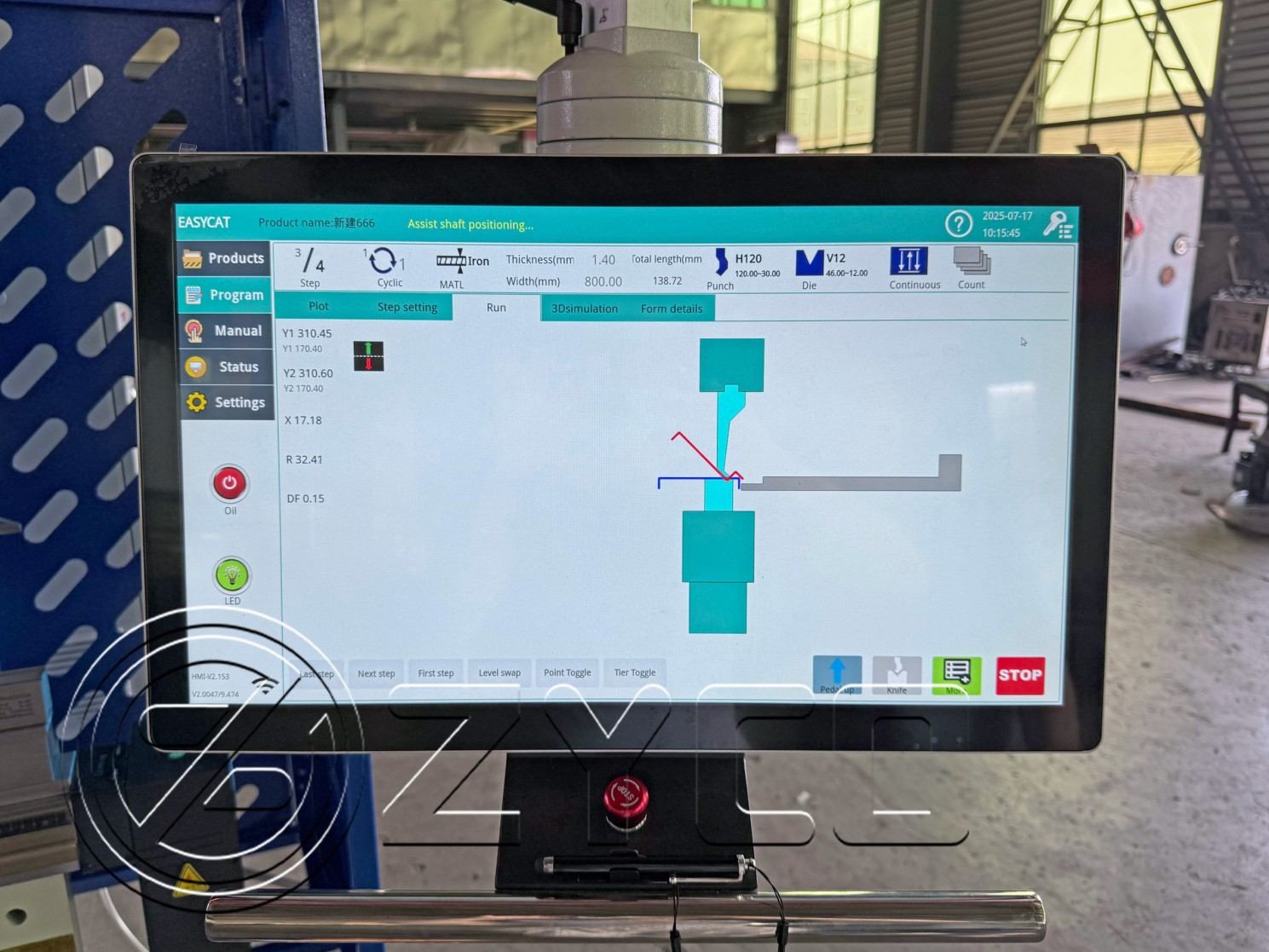
      The matching CNC systems (such as DELEM DA53T, DA66T, EASYCAT ET18, ESA S660W, etc.) all support:


      hydraulic sheet metal brake


      · Multi-language operation interface (English, Spanish, French, etc.);

      · Graphical programming, even beginners can quickly get started;

      · Bending simulation function allows early detection of collisions and angle deviations.

      Result: Customers no longer have to rely on "experienced workers", and newcomers can easily get started.


      Summary


      In 2025, ZYCO electro-hydraulic bending machine is not only an equipment choice, but also the "standard configuration" for global sheet metal processing companies to move towards high quality, high efficiency and intelligent manufacturing.

      If you are an importer, distributor or end customer, and are looking for a bending solution with high precision, low energy consumption, easy maintenance and strong automation support, the electro-hydraulic bending machine will be your best choice.

      Can the Evaporative Air Cooler be used on rainy days?

      2025-07-30

      When turning on the air cooler and cooling function on rainy days, certain 

      situations may occur:

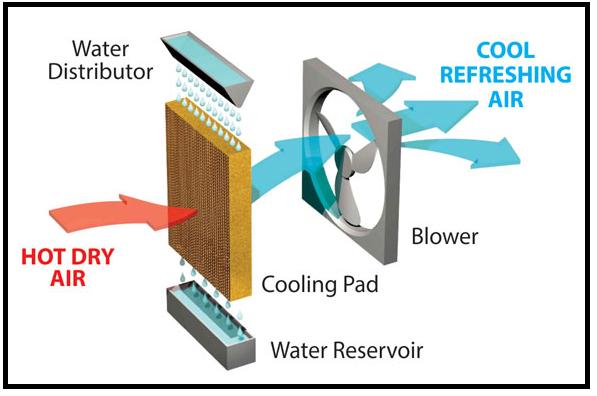
      Principle.jpg

      1. Water leakage at the air outlet may occur. While rain water normally cannot enter the air cooler, 

      strong wind and rain outdoors may allow rainwater to enter and cause leakage.


      2. If the indoor air is humid and the temperature reaches the dew point temperature, there may be 

      condensation on the swing blade of the air outlet, resulting in dripping.


      3. When it is raining outside, the water vapor in the air is close to saturation. Therefore, when the air cooler 

      turns on its refrigeration function, the water above the wet curtain may not be evaporated by the incoming air, leading to a decrease in cooling effect on rainy days.

      Electric Heater VS. Gas Heater

      2025-07-30

      As the temperature drops, many people are gearing up to combat the cold with their heaters. New homeowners or those getting a heater replacement may be intimidated by the prospect of trying to figure out which kind of heater installation is best for their home. Don’t worry, the passionate HVAC specialists at Siboly have created a guide to help you decide which one is best for you. Ok, we have listed four main things that you need to know when deciding between a gas and electric heater.


      1. Pricing

      When it comes to pricing, you have to take installation and operation costs into consideration too. Electric heaters have a cheaper initial installation cost(even ZERO), because they do not need to have a chimney in order to operate, making them easier to install.


      While gas heaters may be more expensive initially, they are a lot cheaper to run compared to electric heaters because gas is less expensive overall than electric. A gas heater may end up saving your money in the long-term.


      2. How Does It Work?

      Both of gas and electric heaters can each be classified into two different types. While each of these heaters do similar work, they function differently.


      Electric Heaters

      Radiation Heater: A radiation heater heats the air by warming up a heating element inside of a glass envelope. It begins to emit the heat as infrared radiation once this glass envelope reaches a certain temperature. A reflector inside of the heater redirects the heat towards the room where it moves around until absorbed by furniture or a body. These types of heaters are best for spot heating, such as in a specific room or office space.


      Convection Heaters: Convection heaters work by creating a fluid movement of hot and cold air. The air around the heater is warmed, forcing it to rise, and cool air fills the gap left behind by the warm air. This creates a constant airflow of warm air. As with radiation heaters, this type of heater is best when used in a closed space, such as a singular room or within an office. These types of heaters can either be oil or ceramic filled. 


      Gas Heaters

      Flued Heaters: This type of heater has to be permanently installed into a home or building and requires a flue, or chimney, to remove the emitted gas. A flued heater uses combusted gas which heats up the air around it. The consumed gas is emitted in order to ensure the safety of the home. This type of heater is fantastic for heating up large spaces.


      Non-Flued Heaters: This type of gas heater is vent-free. It is best to put this type of heater near proper room ventilation, such as a window. This type of heater works similarly to the others mentioned above; it combusts gas in order to warm up the air around it and which then moves around the room/home.


      3. Safety Concerns

      While deciding which type of heater is best for you, please understand safety is always a priority. Here are the safety concerns to keep in mind:


      Electric Heater Safety Concerns

      Radiation heaters produce intense heat which causes the surface to get extremely hot. Combustible materials should be kept well away from this type of heater as they could catch fire. There is also a risk of burning yourself if you accidentally touch the hotspots of the heater.


      Gas Heater Safety Concerns

      Gas heaters produce dangerous gasses such as carbon monoxide and nitrogen dioxide. While a flued gas heater has a chimney to get rid of the dangerous gas, a ventless one does not. It is highly recommended to turn off a non-flued gas heater during the nighttime to prevent the potential build-up of hazardous gasses.


      4. Which Type of Heater is Best?

      It's really hard to tell which heater is best. Electric and gas heaters are designed to meet different needs. If you need to heat a smaller space, an electric heater would be better for you, but a gas heater is probably better suited for a larger space. Your decision should be based on your and your family’s actual needs.


      Still have some questions about which type of heater would work best for your situation? Contact Siboly! Our dedicated and passionate staff would love to help you find the perfect heater for your home.

      Categories
      Tags